
Profiled Projects
North West Provincial Wetland Inventory:
Eco-Pulse Environmental Consulting Services was appointed by the North West Department of Economic Development, Environment, Conservation and Tourism (DEDECT) to update the North West Provincial Wetland Inventory. This province-wide project included extensive field verification, remote sensing trials, and desktop validation to produce a significantly improved and ecologically sound wetland dataset. The updated 2024 inventory was a key input into the North West Biodiversity Sector Plan (BSP) and is supporting the province’s Protected Area Expansion (PAE) strategy. The work has strengthened the ecological foundation for land-use planning, water resource management, and conservation prioritisation across the province.
Wetland Management Guidelines: A contribution towards capacitating local government:

‘ICLEI – Local Governments for Sustainability’ is a global network of local and regional governments committed to sustainable urban development. ICLEI aims to support and empower local governments through providing capacity building, technical services, networking opportunities and urban solutions.
The Local Action for Biodiversity: Wetlands South Africa (LAB: Wetlands SA) project, which is a USAID funded project implemented by ICLEI, is aimed at improving local government knowledge and understanding of the value of wetlands, initiating the process of integrating wetlands and ecosystem services into local government planning and decision making, and implementing and piloting on the ground wetland projects within participating municipalities.
To further the aims of the project ICLEI appointed Eco-Pulse Consulting to develop Wetland Management Guidelines for South African municipalities. Compiling this guideline document involved consolidating best-practice information and working with a range of municipalities and service providers to provide a comprehensive suite of practical guidelines to inform wetland management at the local government level. The resulting 300-page document has been widely distributed and provides detailed guidance on a range of aspects including: (i) the value of wetlands; (ii) the mandates and powers of municipalities related to wetland management; (iii) how to develop a strategy to improve wetland management; (iv) how to develop a wetland inventory; (v) how to prioritize important wetlands and wetland interventions; (vi) rehabilitating and enhancing wetland values; (vii) best practice measures for managing development impacts on wetlands; (viii) how to set up wetland monitoring and enforcement capacity; and (ix) how to proactively incorporate wetland management objectives into municipal planning. The guideline was specifically aimed at capacitating local government staff with little background in wetland management including town planners, engineers, environmental officers, municipal administrators, department managers and policy makers.
Kigali Wetland Rehabilitation:

Kigali, the capital city of Rwanda, surrounds a vast network of broad valley bottom wetlands. Historically, little investment has been put towards preserving and restoring Kigali’s wetlands, despite these ecosystems representing a natural capital base that supports the city with vital ecosystem services. However, an increase in the understanding of the benefits of nature-based solutions in addressing contemporary urban issues has led to interest in the role wetlands can play in the future of Kigali City. To this end, Pegasys, an independent advisory group focusing on transformative development in emerging economies, has provided technical support to the World Bank in investigating opportunities for investment in wetland restoration in Kigali City. Doug Macfarlane (Eco-Pulses Principle Scientist) was a key member of the Kigali investigation team as the lead Wetlands Expert. In this role Doug was for responsible for identifying and screening opportunities for investment in wetland restoration in Kigali City. This included reviewing available information, undertaking site visits and liaising with key governmental stakeholders to investigate wetland restoration options and alternatives. This culminated in the development of a preliminary investment plan with associated costings as part of an application for international funding for wetland restoration in Kigali. Stuart Dunsmore, another member of the Urban Rivers Alliance has subsequently joined the project, and together with Eco-Pulse are providing further technical support to the World Bank team by guiding further rehabilitation planning for priority wetland restoration sites in Kigali City.
Developing guidelines for Wetland Offsets in South Africa:
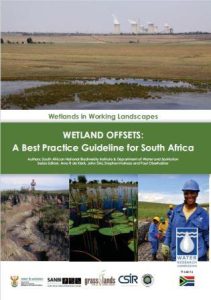
Doug Macfarlane (Eco-Pulse Environmental Consulting) was initially appointed by the SANBI Grasslands Programme to lead the development of preliminary best-practice guidelines for wetland offsets in South Africa. Following this initial phase, SANBI, in partnership with the Department of Water and Sanitation, undertook extensive stakeholder engagement to refine and finalise these guidelines. Doug subsequently contributed to reviewing and revising the guidelines and developed an accompanying Wetland Offset Calculator. Published in 2016, the resulting “Wetland Offsets: A Best Practice Guideline for South Africa” (WRC Report No. TT 660/16) provides a comprehensive framework to ensure consistency in applying wetland offsets within water use and environmental authorisation processes. Officially endorsed by the Department of Water and Sanitation, these guidelines aim to achieve ‘No Net Loss’ of wetland functions and values, addressing ecosystem services, conservation objectives, and the protection of species of concern. The guidelines, along with the Wetland Offset Calculator, are freely available from the Water Research Commission (www.wrc.org.za).
Developing a guideline for the determination of buffer zones for rivers, wetlands and estuaries:
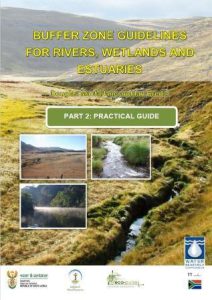
The determination of scientifically defensible buffer zones around aquatic ecosystems has been a longstanding challenge in South Africa. In response, the Water Research Commission appointed the Institute of Natural Resources, in collaboration with Eco-Pulse Environmental Consulting, to develop practical guidelines and user-friendly tools for buffer zone delineation applicable to rivers, wetlands, and estuaries. Led by Doug Macfarlane, the project culminated in comprehensive Technical and Practical Manuals, supported by spreadsheet-based assessment tools that integrate desktop and site-based criteria. These outputs enable developers, environmental practitioners, and regulatory authorities to consistently and transparently determine appropriate buffer zones, effectively balancing development needs with the protection of sensitive aquatic environments. The guidelines and associated tools have been officially published and are freely accessible through the Water Research Commission and through a dedicated web site (https://sites.google.com/site/bufferzonehub).